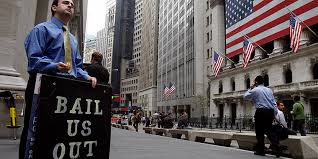
I remember 2008 not as a year of financial catastrophe, but as the year adults around me started using a new word: meltdown. It appeared on news tickers, in dinner table conversations, in the worried faces of people watching CNBC with the volume turned low. The word felt American and distant, belonging to a world of Wall Street trading floors and subprime mortgages that had nothing to do with us. We were India. We were growing. We were, as every economic headline of that era insisted, decoupled.
We were not decoupled.
The Sensex, which had touched 21,000 in January 2008 riding a wave of foreign institutional investment and boundless optimism, fell to below 8,000 by October. Nearly 60% wiped out in under a year. Foreign institutional investors who had poured money into Indian equities during the boom simply fled. The rupee weakened sharply. Export-oriented sectors, particularly IT and textiles, felt the bite almost immediately as their American and European clients tightened budgets or stopped paying altogether. The decoupling thesis died quietly, with very little ceremony.
"India did not cause the crisis. But it learned, painfully, that in a globalised world, you do not have to light the fire to get burned."
The roots of the crisis, of course, lay elsewhere. In the United States, banks had spent years handing out home loans to people who could not afford them. These mortgages were bundled, repackaged, and sold to investors around the world as AAA-rated financial instruments considered safe and even desirable. Everyone made money. Nobody asked hard questions. And then borrowers began to default, the elegant structure collapsed inward, and Lehman Brothers filed for bankruptcy on September 15, 2008, taking the confidence of an entire era with it.
What I find most striking, looking back, is not the complexity of the instruments involved. It is the human psychology underneath them. Intelligent people at the world's most sophisticated institutions convinced themselves that housing prices could only go up. Risk officers built models that assumed tomorrow would look like yesterday. Rating agencies trusted banks. Banks trusted their own models. Everyone was incentivised to believe, and so everyone believed, right up until they didn't.
India had its own version of this psychology, though milder. The years between 2003 and 2007 had produced a particular kind of confidence in Indian markets. GDP was compounding at 8 to 9 percent. The middle class was expanding. Real estate prices in cities like Mumbai, Bangalore, and Hyderabad were rising at rates that seemed, in retrospect, quietly untethered from fundamentals. The crisis did not create these vulnerabilities. It just exposed them.
"Aboom does not feel like a bubble from the inside. It feels like you finally figured something out."
The RBI and the Indian government moved relatively quickly. Fiscal stimulus packages, liquidity injections, and interest rate cuts followed in succession. The policy response was more coordinated than many expected. By 2009, India had bounced back faster than almost every other major economy. Growth dipped but never turned negative. The banking sector, because of tighter regulatory norms and lower exposure to exotic instruments, held up considerably better than its Western counterparts. This was not luck. It was the quiet dividend of conservative regulation that had often been dismissed as timidity during the boom years.
Still, the human cost was real. Jobs in export sectors vanished. Small business credit dried up. Families who had invested in equity markets, many of them first-generation retail investors who had entered during the bull run, watched their savings shrink in ways they did not fully understand. The crisis reached people who had never heard of a CDO and had no reason to.
I study economics and finance now, partly because of questions the 2008 crisis planted in me. Why do smart institutions make catastrophic collective mistakes? How does risk travel across borders through channels nobody is watching? What do we owe each other when a system built for profit produces losses that fall unevenly on those least equipped to absorb them? These are not just academic questions. They are the central questions of our financial moment, one where Indian capital markets are more globally integrated than ever, where retail participation is at historic highs, and where the next crisis, whatever shape it takes, will reach us faster than the last one did.
Indian markets eventually recovered. But the 2008 crisis left something harder to recover: a generation's first real lesson in systemic fragility. The lesson is not that markets are bad, or that growth is an illusion. It is simpler and more uncomfortable than that. The system is only as honest as the incentives inside it. When those incentives reward short-term gain over long-term prudence, the collapse is not a surprise. It is a bill, arriving late.