Let Me Set the Scene
It's 2021. Markets are on fire. Your neighbour who used to talk about football scores is now talking about options. Your college group chat has a "stocks" thread that's more active than the memes one. And somewhere on CNBC, Shaquille O'Neal is talking about his SPAC. If you had no idea what a SPAC was back then, you weren't alone. Most people didn't. But a lot of people bought into them anyway — because someone famous was involved, because everyone else seemed to be doing it, and because the market had been going up so long that it felt like it would never stop.That was the mood. And SPACs fed off it perfectly
Okay, So What Actually Is a SPAC?
Here's the simplest way to think about it.
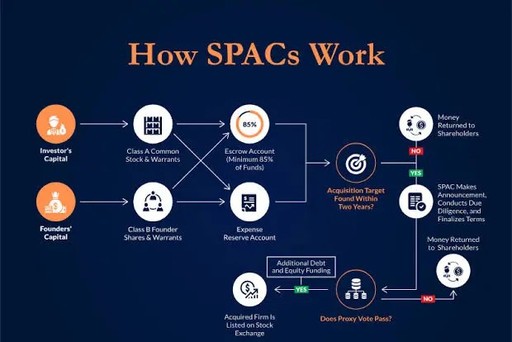
Imagine someone named Rahul goes to investors and says: "Give me ₹1,000 crore. I don't have a company yet, but trust me, I'll find a great one. You'll get your money back if I don't. And if I do find something good, we'll all get rich."
Investors say yes. Rahul takes that money, lists a shell company on the stock exchange, and starts shopping. When he finds a private company that wants to go public but doesn't want the hassle of a traditional IPO, they merge. The private company becomes publicly listed overnight. Rahul takes his cut. Everyone moves on.
That's a SPAC. A blank cheque company. A shell with a promise inside.
In normal times, this was a niche instrument that mostly lived in the footnotes of financial journalism. Then 2020 happened, and nothing was normal anymore.
The Pandemic Changed Everything
When COVID hit, central banks panicked and slashed interest rates to near zero. Governments sent out stimulus money. People were stuck at home, bored, with more cash than usual and a phone full of trading apps.
The stock market, bizarrely, started going up.
And in that environment, SPACs made perfect sense. Why wait 18 months for a traditional IPO when you could go public in six? Why subject yourself to brutal underwriter scrutiny when a friendly SPAC sponsor would take you public with far less friction? For companies with a good story and big ambitions, it was irresistible.
In 2019, 59 SPACs raised $13 billion. By 2020, 247 SPACs raised $80 billion, more than four times the previous year, and SPACs made up more than half of all newly listed US companies that year. Certuity
And then 2021 arrived and made 2020 look restrained. 613 SPAC IPOs collectively raised around $162 billion. Wikipedia At the peak, SPACs accounted for 64% of all IPOs in the US. Foley & Lardner LLP
Nearly two-thirds of all companies going public in America were doing it through a blank cheque shell. Let that sink in.
Why Everyone Wanted In
Here's the thing about SPACs that made them so seductive: they looked like a good deal for everyone involved.
For private companies, it was a faster, cheaper, less painful path to going public. No months of investor roadshows. No brutal pricing negotiations on listing day. Just find a willing SPAC, agree on a valuation, and you're done.
For sponsors (the people running the SPAC), the deal was almost comically good. They typically got a 20% equity stake in whatever company they acquired, essentially for free. So if they raised $500 million and the company they bought ended up being worth $1 billion, they pocketed $200 million without having put up much of their own money. And even if the stock tanked afterward, sponsors had usually already locked in their gains.
For retail investors, it felt like getting access to something exclusive, like buying into a startup before it blew up. Someone smart and well-connected was doing the hard work of finding the next big thing, and you could ride along for $10 a share.
It seemed like a win-win-win. These rarely are.
The Part Everyone Ignored
There was a structural problem sitting right in the middle of all this, and almost nobody wanted to talk about it.
Sponsors had two years to find a company to buy. If they didn't, they had to return the money and walk away with nothing. So imagine you're eight months from your deadline and you haven't found the perfect company. The pressure to just do something becomes enormous. Do you wait for the ideal deal? Or do you take the pretty-good deal in front of you, collect your 20%, and figure the rest will work itself out?
This misaligned incentive may have pushed sponsors to hastily finalise deals even when they weren't in the best interest of investors, since sponsors profited regardless of whether the stock later tumbled. Certuity
Due diligence, the boring but crucial process of actually checking whether a company's numbers add up, quietly became optional. With cheap money everywhere and fierce competition among buyers, FOMO was rife, and due diligence became an undue burden, something to worry about tomorrow. Proactiveinvestors NA
A lot of the companies going public via SPAC had one thing in common: they were great at telling a story. Electric trucks. Space tourism. Digital health. The metaverse. The actual revenues? Those were coming. Soon. Probably. Trust the slide deck.
And Then the Music Stopped
By early 2022, interest rates started climbing. Inflation was real. The era of free money was ending. And investors, suddenly anxious, started asking a question they'd been too excited to ask before: does this company actually make money?
For most SPAC-listed companies, the answer was uncomfortable.
By 2022, SPACs had fallen from 61% of US public listings to just 8% of new IPOs, leaving a trail of underperforming acquisitions and liquidated shell companies in their wake. Proactiveinvestors NA
The losses were brutal. SPACs that completed mergers between July 2020 and December 2021 had a mean share price of $3.85 by December 2022, a fall of over 60% from the $10 investors started with. The average post-merger SPAC underperformed the average traditional IPO by 26%. Wikipedia
Then the high-profile disasters started rolling in.
Nikola, an electric truck company that went public at a valuation briefly higher than Ford, turned out to have faked a promotional video. The truck wasn't driving. It was rolling downhill. The founder was later convicted of fraud.
Fisker, another EV darling that SPAC-listed at a $6 billion valuation, filed for bankruptcy in 2024. FTI
FaZe Clan, the esports group that went public at $725 million (already revised down from $1 billion), eventually traded near $44 million. That's not a typo.
And even the big boys weren't spared. Bill Ackman, one of the most respected names on Wall Street, raised the largest SPAC ever at $4 billion, couldn't find a suitable company to buy, and had to return every dollar to investors. Proactiveinvestors NA
Who Actually Won?
A few companies did come out fine. SoFi used its SPAC proceeds wisely, acquired a banking licence, built real products, and eventually reached genuine profitability. Grindr went public via SPAC in 2022 and performed well on the back of a loyal user base and a clear business model.
What did they have in common? Real revenues. Real users. A path to actually making money that didn't involve the words "once we scale."
Boring, in other words. Genuinely, reassuringly boring.
So What Do We Take From All This?
The SPAC story isn't really about SPACs. It's about what happens when too much money chases too few good ideas, and when the people setting up the deals have very different incentives from the people funding them.
Research across thousands of SPAC deals from 2016 to 2023 found that regular investors, especially retail investors, earned mostly negative returns from companies that went public this way. SSRN The sponsors and early institutional investors who could exit before or right after the merger? They mostly did fine.
By the time the average person heard about a SPAC on the news and bought in, the smart money was already heading for the exit.
This pattern (excitement, access, hype, late retail entry, collapse) isn't unique to SPACs. You'll see it in crypto cycles, meme stocks, and NFTs. The asset class changes. The dynamic doesn't.
The next time something feels like a can't-miss opportunity that everyone's talking about, it's worth pausing and asking: who benefits if this works out, and who bears the cost if it doesn't?
In the SPAC boom, that question had a pretty clear answer. Most people just didn't stop to ask it.